

Earthspice · Food & Beverage
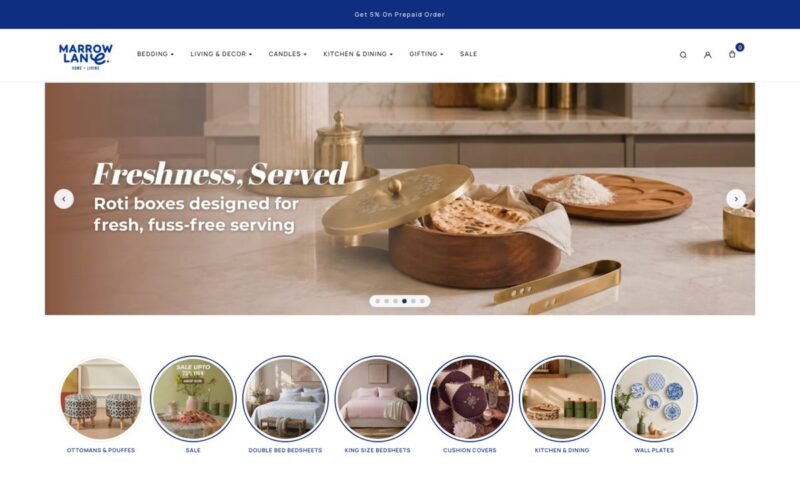
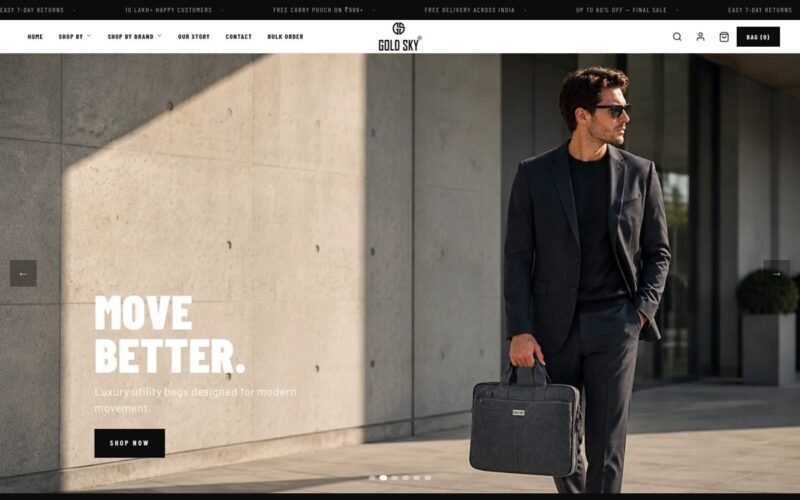
Earthspice: A Custom Shopify Theme for a 40-Year-Old Family Spice Brand
Shopify Website Design & Development
CustomShopify theme
3curated spice collections
1985founder story, told as a timeline
Your CPC looks fine but every sale costs more than the margin it brings in.
What it costs you
Ad spend that buys clicks, not customers
Where it shows up
A thumb-stopping Meta ad finds the right buyer in their Instagram or Facebook feed.
The hook, the offer and the creative give them a reason to tap now — not "later".
A fast Shopify landing page that keeps the exact promise the ad made.
Checkout, COD, shipping, trust. Every bit of friction decides who pays and who leaves.
Automated WhatsApp flows win back abandoned carts and turn first orders into repeat ones.
A rising cost per purchase is a symptom, not a diagnosis. Before changing audiences or budgets, check the three stages around the ad: is Meta receiving accurate purchase data, does the creative give a clear reason to buy now, and does the landing page continue the ad’s promise? Most brands we audit try to fix cost per purchase inside Ads Manager, when the cause sits in tracking, the offer or the store.
“High” only means something against your own numbers. Your break-even cost per purchase is the most you can pay Meta for one delivered order before you lose money on it:
Break-even cost per purchase = (selling price excluding GST − product cost − shipping and packaging − payment fees) × share of orders actually delivered − RTO loss per order
An illustrative example for a D2C brand in India:
| Line | Per order |
|---|---|
| Average order value (excluding GST) | ₹1,200 |
| Product cost | − ₹420 |
| Shipping and packaging | − ₹90 |
| Payment gateway (about 2%) | − ₹24 |
| Contribution before ads | ₹666 |
| Half of orders on COD, a quarter of those returned (12.5% of all orders) | × 0.875 = ₹583 |
| Return shipping lost on RTO orders (12.5% × ₹150) | − ₹19 |
| Break-even cost per purchase | ≈ ₹564 |
That brand breaks even at roughly 2.1× ROAS (₹1,200 ÷ ₹564). If Meta shows a ₹450 cost per purchase, the account is profitable even though it “feels” expensive. If it shows ₹700, scaling will only lose money faster. Run your own numbers in the break-even ROAS calculator, which includes GST and RTO.
Compare purchases in Meta Events Manager with orders in Shopify or WooCommerce for the same seven days. A small gap is normal; a big gap in either direction means Meta is optimising on the wrong data. Check that the Pixel and the Conversions API both send the purchase event, that they share an event ID so purchases are not double-counted, and that the order value is passed. If the numbers do not match, fix pixel and Conversions API tracking before touching anything else.
Add these columns in Ads Manager and read them left to right. The first big drop is where the money leaks:
Meta needs about 50 optimisation events per ad set in a week to leave the learning phase. Ten small ad sets with ₹500 a day each rarely get there, so they stay stuck in learning with unstable costs. Fewer ad sets with more budget each, broad targeting and several strong creatives usually beat narrow interest stacks for D2C brands.
Cheap clicks with expensive purchases often mean the creative earns curiosity but not intent. The ad should show the product in use, state the price or offer, and give a reason to buy now, such as a launch price, a bundle or free shipping above a threshold. Our 3-creative framework explains how we structure tests.
If the ad promises “Buy 2, get 1 free” and the click lands on a homepage carousel, most of that intent is lost. Each main ad angle needs a page that repeats the same headline, offer and visual, with price and the buy button in the first mobile screen.
Meta counts a COD order as a purchase the moment it is placed. If a large share of those orders are refused at the door, Meta is learning to find people who place orders, not people who pay for them. Your cost per purchase in Ads Manager looks better than your real cost per delivered order. Confirm COD orders on WhatsApp before dispatch, nudge buyers to prepaid with a small incentive, and track delivered orders separately. Our guide to reducing RTO on COD orders covers the full checklist.
Often the ads are fine. The store, the checkout or the follow-up is where buyers are lost, and no targeting change will fix that. That is why we plan the ad, the landing page and the WhatsApp follow-up together. Read our Meta Ads playbook for D2C brands in India for the full sequence, or see how we run Meta Ads for Shopify stores.
Campaigns optimise for cheap clicks because the pixel never learns who actually buys.
The creative shows the product but gives no reason to buy today.
The ad says one thing, the page says another, and the click is wasted.
Clean pixel + Conversions API so Meta optimises for purchases, not traffic.
Lead with a clear, time-bound reason to buy in the first 3 seconds of the creative.
Every ad angle gets a landing page that continues the same story.
Proof
Other leaks
Ads that worked last month have stopped — frequency is up, CTR is down.
Meta reports half the sales Shopify does — or double. Nobody trusts the numbers.
Traffic is arriving from ads, but visitors bounce before touching the cart.
FAQ
Usually a mix of weak purchase signal (pixel or Conversions API issues), an offer that gives no reason to buy now, and a landing page that doesn't match the ad. Fixing the signal first lets Meta optimise for buyers instead of clicks.
No. Scaling spend on a funnel that leaks makes cost per purchase worse. Fix tracking, the offer and the landing page first, then scale what is profitable.
No. Often the ads are fine and visitors simply never reach the cart — check whether you have clicks but no add to cart first. Our playbook on Meta Ads for D2C brands in India walks through tracking, offer and landing page in order.
A free 30-minute audit of your ads, store and follow-up — with the three fixes we'd make first.